(function(w,d,s,l,i){w[l]=w[l]||[];w[l].push({'gtm.start': new Date().getTime(),event:'gtm.js'});var f=d.getElementsByTagName(s)[0], j=d.createElement(s),dl=l!='dataLayer'?'&l='+l:'';j.async=true;j.src= 'https://www.googletagmanager.com/gtm.js?id='+i+dl;f.parentNode.insertBefore(j,f); })(window,document,'script','dataLayer','GTM-5V2PV3KX');

The A.Y. 2026-2027 online application for incoming Grade 11 and College freshmen are now open. Click here to begin!

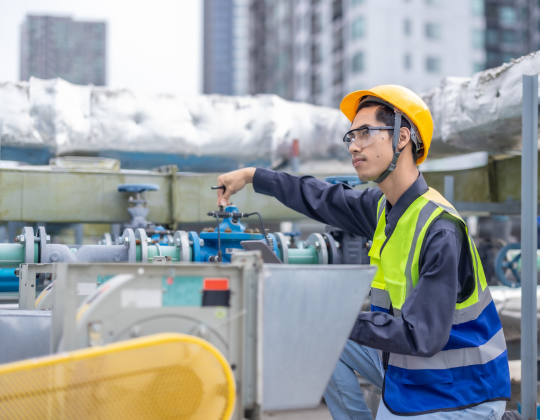
Lead the Charge for a Greener Future with Mapúa’s Bachelor of Science in Environmental and Sanitary Engineering

Be a champion of people and planet by engineering sustainable systems that confront climate challenges, protect vital resources, and build a future where humanity and nature thrive together.

230+

employer partners

10

career path

Features & Flexibility

Complete your degree with flexible program options designed around your goals, schedule, and learning needs. Enjoy a more convenient path to academic success with features that help you move forward with confidence.

Blended

Learning Mode

August

Start of Classes for the First Term

16

Scholarships

4 years

Program Length


Program Educational Objectives

BS Environmental and Sanitary Engineering Program Outcomes 

ABET Student Outcomes 

1. An ability to identify, formulate, and solve complex engineering problems by applying principles of engineering, science, and mathematics;

2. An ability to apply engineering design to produce solutions that meet specified needs with consideration of public health, safety, and welfare, as well as global, cultural, social, environmental, and economic factors;

3. An ability to communicate effectively with a range of audiences;

4. An ability to recognize ethical and professional responsibilities in engineering situations and make informed judgments, which must consider the impact of engineering solutions in global, economic, environmental, and societal contexts;

5. An ability to function effectively on a team whose members together provide leadership, create a collaborative and inclusive environment, establish goals, plan tasks, and meet objectives;

6. An ability to develop and conduct appropriate experimentation, analyze and interpret data, and use engineering judgment to draw conclusions; and

7. An ability to acquire and apply new knowledge as needed, using appropriate learning strategies.


PTC and CHED Student Outcomes 

A. An ability to apply knowledge of mathematics, science, and engineering;

B. An ability to design and conduct experiments, as well as to analyze and interpret from data;

C. An ability to design a system, component, or process to meet desired needs;

D. An ability to function on multidisciplinary teams;

E. An ability to identify, formulate, and solve engineering problems;

F. An understanding of professional and ethical responsibility;

G. An ability to communicate effectively;

H. The broad education necessary to understand the impact of engineering solutions in the global and societal context;

I. A recognition of the need for, and an ability to engage in life-long learning;

J. A knowledge of contemporary issues;

K. An ability to use the techniques, skills, and modern engineering tools necessary for engineering practice;

L. Knowledge and understanding of engineering and management principles as a member and leader in a team, to manage projects in multidisciplinary environments; and

M. Understand at least one specialized field of Environmental and Sanitary engineering practice.

Career Opportunities

Air Quality Specialist

Monitors and controls air pollutants by utilizing modeling tools and emission reduction strategies to protect environmental and human health.

Climate Change Analyst

Assesses the environmental impact of human activities and infrastructure projects, providing data-driven recommendations for climate action.

Key Skills You'll Develop

Skill-1 Skill-2

Environmental Compliance Officer

Ensures that organizations meet environmental laws and safety standards, often working with regulatory agencies and internal audit teams.

Key Skills You'll Develop

Skill-1 Skill-2

Environmental Engineer

Designs and implements solutions to environmental challenges such as pollution control, waste management, and water treatment—key competencies developed in BS Environmental and Sanitary Engineering at institutions like Mapúa.

Environmental Impact Assessor

Prepares technical studies to evaluate the potential effects of development projects on the environment—an integral role for Mapúa-trained BS Environmental and Sanitary Engineering professionals.

Industrial Hygiene Engineer 

Evaluates and controls workplace environmental hazards such as air contaminants and chemical exposures, ensuring worker safety and regulatory compliance.

Public Health Engineer

Develops sanitation and hygiene infrastructure to protect communities from health hazards, particularly in urban and disaster-prone areas.

Key Skills You'll Develop

Skill-1 Skill-2

Sanitary Engineer

Ensures the safe design and operation of public health systems including sewerage, drainage, and solid waste facilities, rooted in the principles of environmental and sanitary engineering.

Waste Management Consultant

Advises public and private sectors on efficient, sustainable waste handling practices, including recycling, landfill design, and material recovery.

Water Resources Engineer

Applies technical knowledge from an Environmental and Sanitary Engineering degree to manage water supply systems, protect water quality, and optimize water resource use.