Preparing Mapúa Students for Real-World Nursing in the Philippines and Beyond
Healthcare demands more than academic excellence. It requires readiness, resilience, and the ability to respond confidently in real clinical settings. For students studying nursing and aspiring to become future healthcare professionals, preparation is everything.
Mapúa University equips future nurses with the skills, discipline, and mindset to create meaningful impact in hospitals, communities, and global healthcare systems. As one of the forward-looking institutions offering a competitive nursing program, Mapúa ensures that graduates are ready to meet the realities of nursing in the Philippines and abroad.
Building Competent Nurses Through Top-Notch Nursing Education
Preparing students for real-world practice requires intentional curriculum design, immersive experiences, and exposure to healthcare environments that reflect actual industry demands. Here is how we translate theory into practice.
1. Clinical Practicum
Clinical practicums are an indispensable part of nursing education. Mapúa partners with accredited hospitals and healthcare institutions to give students structured clinical exposure. During these rotations, students assess patients, administer medications under supervision, document care plans, and collaborate with multidisciplinary teams.
Practicum experiences are designed to help students develop clinical judgment, time management, patient communication skills, and professional accountability. These competencies are critical in real hospital settings where quick thinking and teamwork directly affect patient outcomes.
2. Advanced Simulation Centers and Modern Teaching Technologies
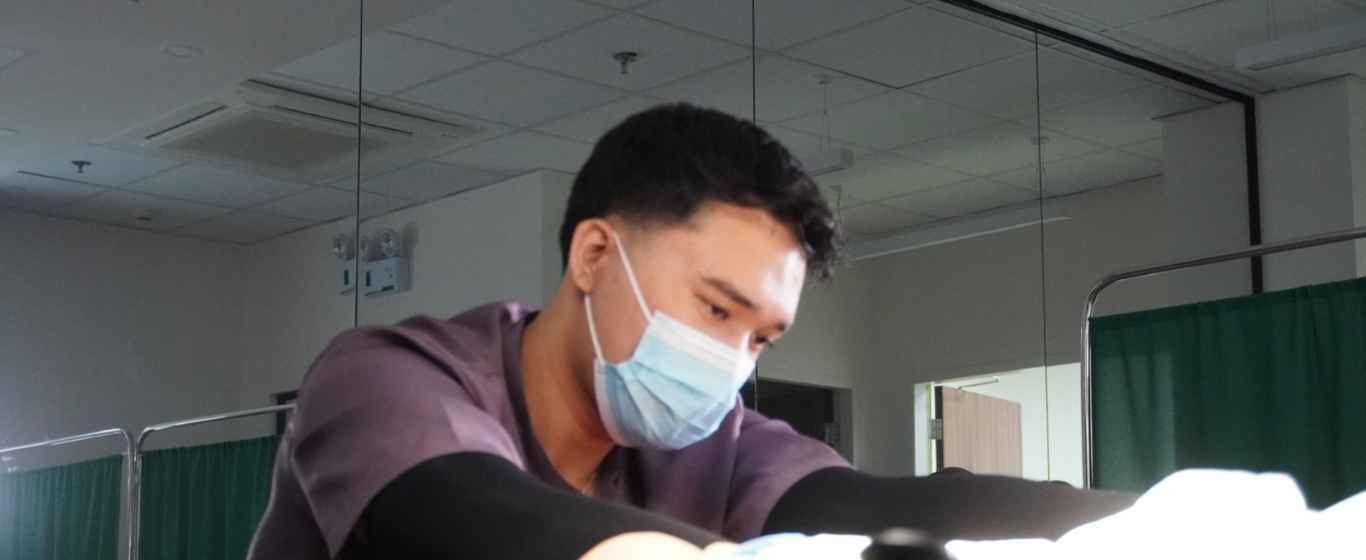
Students train in state-of-the-art simulation centers before entering live clinical environments. These facilities replicate emergency rooms, hospital wards, and critical care scenarios. Using high-fidelity mannequins and digital monitoring systems, students practice responding to cardiac events, respiratory distress, and other urgent situations.
This training builds confidence and enhances technical proficiency. It also demonstrates the impact of technology in nursing practice, allowing students to integrate digital tools into patient care.
3. Strong Scientific and Clinical Foundations
A rigorous academic structure ensures that students master core medical sciences, including anatomy, physiology, microbiology, pharmacology, and pathophysiology. Instead of relying solely on textbook memorization, Mapúa emphasizes applied learning and critical analysis. This is what sets us apart from other nursing schools in the Philippines.
Students are trained to interpret laboratory results, understand disease mechanisms, and connect theory with patient conditions. This deep foundation enables them to make informed clinical decisions rather than simply follow instructions. It strengthens their competence in complex healthcare situations.
4. Alignment With Local and International Healthcare Standards
Mapúa’s nursing curriculum is strengthened through its collaboration with Arizona State University®, a globally recognized institution known for innovation and academic excellence. This partnership ensures that the program aligns not only with Philippine licensure requirements but also with international healthcare standards.
Students are trained under a framework that integrates global best practices, ethical decision-making models, and evidence-based care approaches. While they are fully prepared to meet the demands of nursing in the Philippines, they are also exposed to international healthcare perspectives that broaden their professional readiness.
This global alignment allows graduates to confidently pursue opportunities both locally and abroad.
5. Research and Evidence-Based Practice Training
Mapúa integrates research projects into the nursing curriculum. Students learn how to analyze data, evaluate clinical studies, and apply evidence-based practices. These skills prepare them to contribute to healthcare improvements and quality assurance initiatives.
In real-world settings, nurses who understand research are better equipped to recommend improvements in patient care and advocate for effective treatment strategies.
6. Leadership and Communication Development
Studying nursing is not only about honing technical skills. It requires leadership, collaboration, and strong communication. Mapúa incorporates team-based projects, case discussions, and reflective exercises that enhance interpersonal skills.
Students learn to communicate clearly and professionally with patients, families, doctors, and fellow nurses. These soft skills are essential in preventing medical errors and promoting patient trust.
Healthcare Excellence That Goes Beyond the Classroom
So, why does quality nursing education even matter? What is Mapúa University’s commitment to its students?
When nursing students are thoroughly prepared, the impact extends beyond individual careers. It transforms healthcare delivery itself.
Well-trained graduates improve patient safety by reducing medication errors and recognizing early warning signs of complications. Their exposure to simulation training enhances emergency response efficiency. Their grounding in ethical standards strengthens patient advocacy and respectful care.
In community settings, nurses who understand public health principles support vaccination drives, health education campaigns, and preventive care initiatives. This directly strengthens healthcare systems across regions.
In hospitals, nurses contribute to multidisciplinary teamwork, support quality improvement initiatives, and adapt quickly to digital documentation systems.
These are the reasons Mapúa University remains a top nursing school in the Philippines. The quality of education and preparation students receive determines how effectively they serve patients. Mapúa’s approach ensures graduates do not enter the workforce unprepared. They enter with confidence, competence, and clarity of purpose.
Begin Your Nursing Journey With Mapúa
Nursing in Mapúa equips students with clinical expertise, technological competence, ethical grounding, and leadership skills. It prepares them not just to pass licensure exams, but to thrive in real healthcare environments.
Take the next step toward becoming a competent, future-ready nurse. It all starts with the right educational foundation here at Mapúa University.