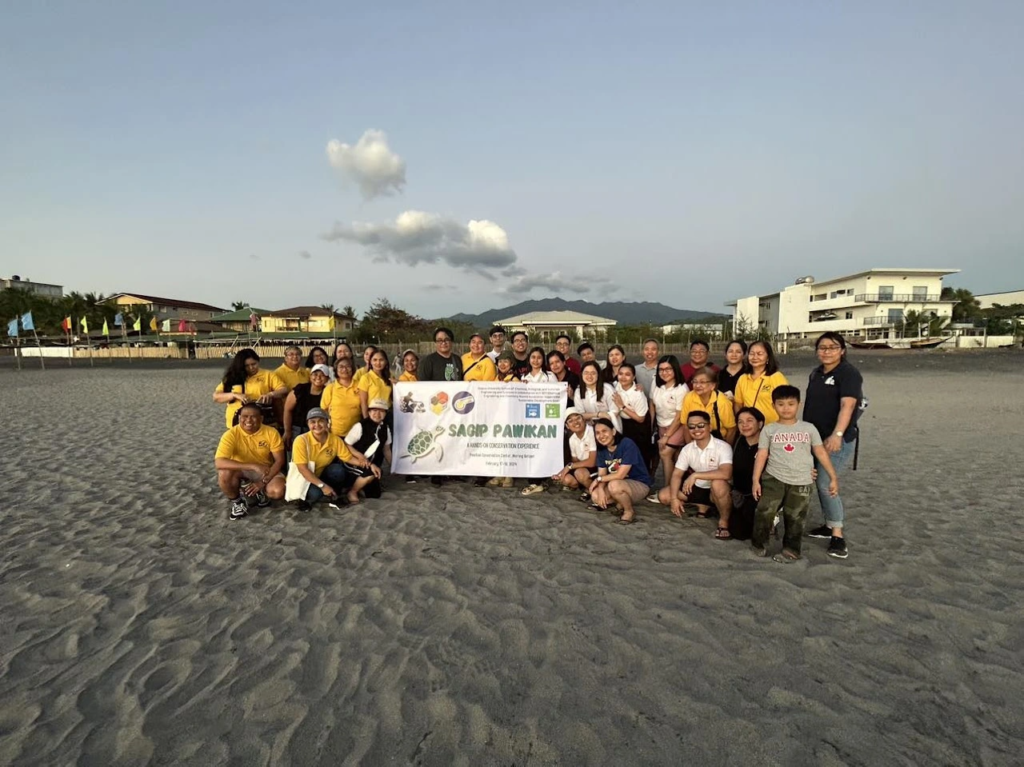
On February 18, 2024, the School of Chemical, Biological, and Materials Engineering and Sciences (SCBMES) teamed up with the MIT ChE-Chm Alumni Association to release more than a hundred sea turtle hatchlings in Morong, Bataan, through the “Pawikan Center” in the area. Twenty-two (22) faculty members and staff of the SCBMES, led by Dean Alvin Caparanga, and thirteen (13) officers and advisers of the Alumni Association, led by its president, Engr. Walter Buenaventura, participated in the event.
As significant as the release of the hatchlings were the initial talks between the Pawikan Center management, SCBMES, and the Mapua Institute for Global Sustainability (Mapua IGS), whose director is also Dean Caparanga. Highlights of the minutes include Mapua University’s support of the Center’s awareness campaign regarding the role of sea turtles in ecology and the reasons people need to protect them. Details of the programs and their sustainability shall be presented once both parties sign a memorandum of understanding.
The conservation of Pawikans, or sea turtles, is not just a noble cause but also a strategic one. It aligns with several UN Sustainable Development Goals (SDGs), making every effort more impactful. The biodiversity conservation program intersects with key SDGs, such as those related to Life Below Water (SDG 14), Life on Land (SDG 15), and Climate Action (SDG 13). This underscores the urgency and importance of any work in sea turtle conservation.
SDG 14: Life Below Water. Turtles are a vital component of marine ecosystems and essential in maintaining the health and balance of the ocean ecosystems. Preserving turtle populations and their habitats helps safeguard biodiversity, promote sustainable fisheries, and ensure long-term marine ecosystems. Protecting turtles from threats such as habitat destruction, pollution, and illegal fishing is essential for achieving SDG 14 targets.
SDG 15: Life on Land. Some turtle species live in coastal areas and terrestrial habitats, making them integral to terrestrial ecosystems. Conserving turtle populations and their habitats supports broader biodiversity conservation efforts and maintains healthy ecosystems on land. Protecting turtle nesting sites from habitat destruction, poaching, and invasive species is essential for preserving biodiversity and achieving SDG 15 targets.
SDG 13: Climate Action. Both marine and freshwater turtles are vulnerable to the impacts of climate change, i.e., rising temperatures, rising sea levels, and ocean acidification. By protecting their habitats and promoting sustainable carbon-emission reduction practices to mitigate climate change, we can help safeguard turtle populations and their ecosystems. In addition, healthy turtle populations contribute to carbon sequestration through seagrass habitats, further supporting climate action resilience efforts.
SDG 17: Partnership for the Goals. Partnerships may broaden the agenda of sustainable development. The collaboration of Mapua University (through the SCBMES), the MIT ChE-Chm Alumni Association, the Pawikan Center of Morong, Bataan, and, probably, other stakeholders is essential to effectively address the complex challenges facing turtle populations and marine and terrestrial ecosystems worldwide.