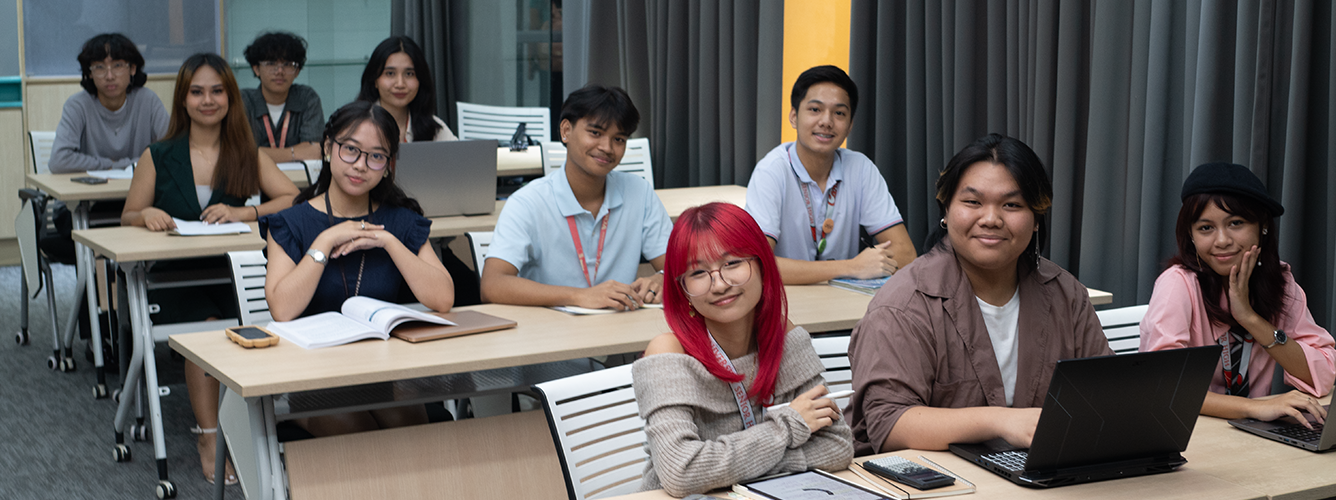
At Mapúa University, students are immersed in a rigorous and progressive learning environment that prepares them for both local and international healthcare settings.
Let’s take a closer look at the MedTech lab experience that will shape the next generation of health science professionals.
The Importance of Clinical Training in a Medical Technology Course
In the world of medicine, accuracy can mean the difference between a right and wrong diagnosis and treatment of a patient. Here’s why hands-on laboratory experience is crucial to BS Medical Technology:
1. Practical Application of Knowledge
Practical training allows students to apply complex theories in real-life scenarios. It builds technical proficiency in medical technology subjects and their relevance in an actual clinical setting. Whether that’s calibrating laboratory instruments, interpreting medical charts, or handling biological specimens with care, working with actual cases allows students to gain a deeper understanding of procedures and workflows. They can envision themselves as practicing professionals.
2. Development of Critical Thinking and Problem-Solving Skills
Real-world clinical work is different from a textbook. When students are in a clinic, they have to quickly assess situations, look at data, and make smart decisions. This process sharpens their critical thinking and problem-solving skills, which are crucial for adapting to the fast-paced healthcare environment. Clinical training also teaches them to weigh different solutions and pick the best one for a patient.
3. Building Confidence and Professionalism
Equally important is developing professional discipline. The lab setting trains students to follow strict safety protocols, maintain sterile conditions, and document results meticulously. These habits ensure that future MedTech professionals can provide reliable and ethical healthcare from the very start of their careers.
How Mapúa University Enhances Clinical Training
The Mapúa-ASU Human Health Learning and Innovation Center brings advanced clinical training to life for medical technology students. Built through the collaboration between Mapúa’s School of Health Sciences and Arizona State University®, our medical technology school boasts immersive labs, simulation suites, and digital tools that mirror real-world healthcare environments.
A Closer Look at the Mapúa-ASU Human Health Learning and Innovation Center
1. Reception and Introduction Area
Entering the center, students of the medical technology course are welcomed in a warm and informative reception area. It sets a clear tone: you are stepping into a modern clinical training environment. This space builds both excitement and clarity, showing how diagnostic tools, safety protocols, and lab workflows will shape your journey.
2. Conviviality Room
The Conviviality Room is more than a break area—it is a collaborative hub for MedTech students and instructors. Here you can discuss lab techniques, solve diagnostic puzzles, or explore research ideas. Whether sharing best practices for sample handling or refining test protocols, this space fosters creativity and peer learning. It’s designed for cross-disciplinary interaction.
3. Digital Life Lab
The Digital Life Lab is where textbook illustrations come to life. Virtual dissections teach organ sample analysis without a blade, while 3D modeling helps you visualize anatomy in detail. Immersive simulations present complex scenarios—like managing lab emergencies or unusual test results—in a controlled, repeatable format. This safe yet high-tech space enables you to build technical agility and diagnostic confidence before handling real specimens.
4. Multidisciplinary Wet Lab
Here, students enrolled in Mapúa’s medical technology program handle real-life blood samples, culture specimens, and run chemical assays, all with the guidance of expert faculty. This hands-on environment allows you to practice precision techniques, from pipetting to microbial staining. You gain insights into how lab diagnostics support overall patient care.
5. Structure and Function Lab
In the Structure and Function Lab, MedTech students engage with interactive models and digital tools to explore human physiology. Understanding the different systems of the human body is essential for interpreting lab results accurately. By studying human anatomy in detail, you strengthen your ability to link clinical findings to underlying physiological processes. This lab ensures your diagnostic reasoning is grounded in a deep appreciation of how the body works.
6. General Ward
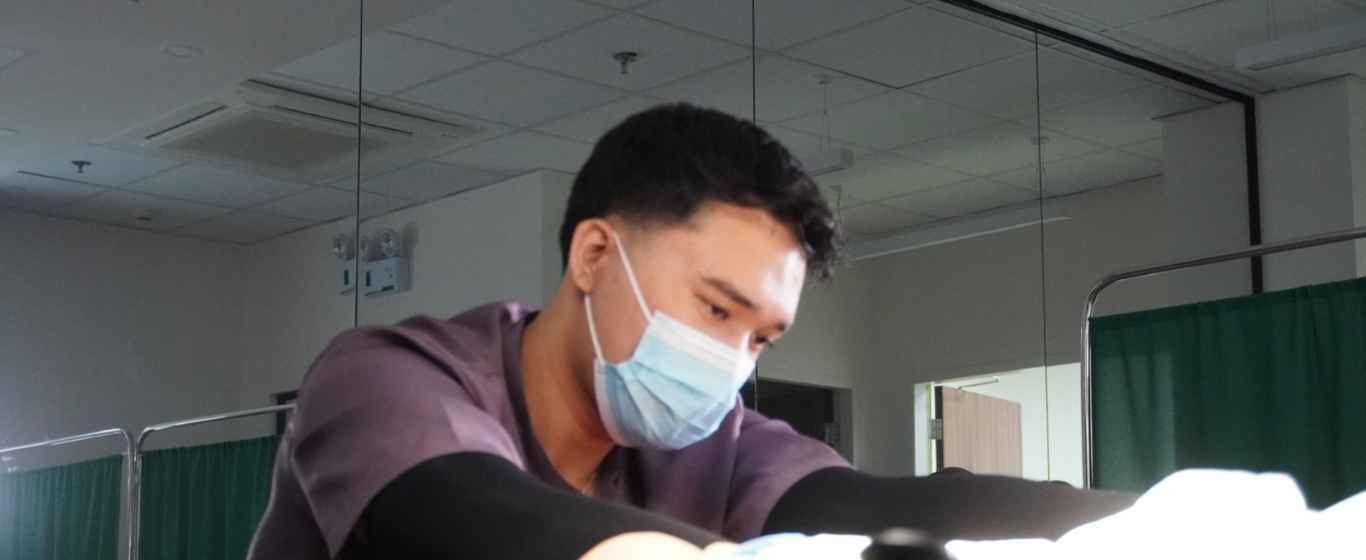
The General Ward simulation area replicates a hospital lab scenario for MedTech training. You practice handling patient specimens, using phlebotomy tools, and preparing samples for testing. High-fidelity manikins replicate patient responses to interventions, allowing you to react appropriately in urgent situations, such as a sample contamination or processing error. This lifelike environment boosts your confidence and attention to detail under pressure.
7. Task Training Lab
MedTech students refine essential clinical and technical skills in the Task Training Lab. You master tasks like sample labeling, slide preparation, and instrument calibration through guided simulations. You also rehearse patient communication to be able to explain test procedures or obtain samples with professionalism. These hands-on exercises develop not just accuracy but also the soft skills necessary for seamless lab operations.
8. Rehabilitation Lab
Though tailored more to therapy disciplines, the Rehabilitation Lab presents a unique perspective for MedTech students who are interested in learning how lab diagnostics inform rehabilitation. Observing these application points helps you appreciate how medical technology supports patient care across disciplines.
9. Advanced Simulation
The Advanced Simulation Lab adapts to different clinical setups—including outpatient labs or community health centers—ideal for MedTech training. One-way mirrors allow discreet observation as you perform tests under varying conditions.
Become a Well-Rounded Medical Technologist with Mapúa
At Mapúa University, MedTech students experience an educational setting that combines precision with innovation. From diagnostic procedures to collaborative healthcare learning, our laboratory sets the foundation for skilled, confident, and globally-ready professionals.
Take the first step to becoming a proficient medical technologist. Your future in healthcare starts here.