
On January 17, 2026, Mapúa University, through its Institute for Global Sustainability, conducted a site visit at the Aquaponics Developmental Area in Lemery, Batangas in partnership with Aquaponics Go Green Trading and Enterprise. The visit, held from 1:00 to 2:00 p.m., brought together key representatives including Maria Consuelo A. Esplana, Campus Sustainability Specialist of Mapúa University, and Eliza Canon and Maritess Banta, CEO and Business Development & Sales Officer of AGGTEDECK Enterprise, Inc.
Brief Introduction of the AGGTEDECK
What began as a personal hobby for Eddy Ruhle has spawned Aquaponics Go Green Trading and Enterprise’s first aquaponic farm, marking the start of a venture dedicated to sustainable food production.
Launched as a backyard business, Aquaponics Go Green Trading and Enterprise was founded by Eddy Ruhle and Elisa Canon, seeking to provide wholesale and retail aquaponic systems and resources. The company, which currently distributes Liapor Hydroton and aquaponic source products, had since grown to be one of the leading suppliers of aquaponic materials in the Philippines.
Located in Taal, Batangas, aquaponic enthusiasts and gardeners from all over the Philippines are now considering Aquaponics Go Green Trading and Enterprise to be the leading supplier of aquaponics materials in the aquaponic industry.
Aquaponics Go Green Trading and Enterprise is set up in a way that loosely reflects the premise of vertical farming in that the tanks and filters belonging to the aquaponic system are stacked on top of one another. Ruhle says, “The right approach to aquaponics is the scientific approach. Through the scientific approach, we are guaranteed that the food that is prepared on our table is chemical free, organic, and nutritious.”
Site View and Orientation
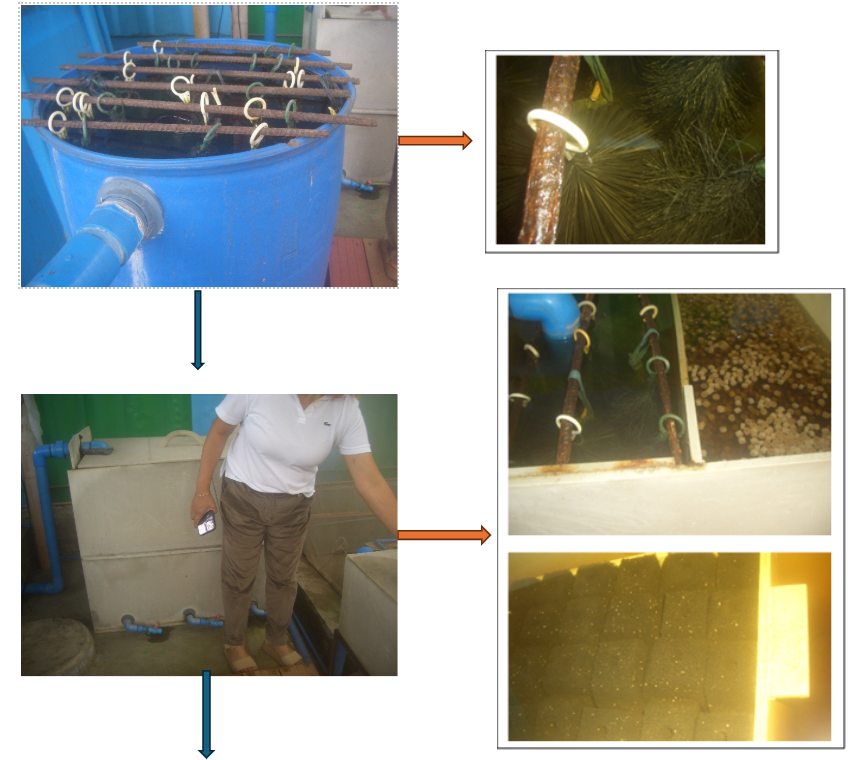
There were two technology systems that were introduced by AGGTEDECK: 1) Aquaponic Media Grow Bed and 2) The Deep-Water Culture/Raft Bed. Pictures below were pictures arranged in sequence, as demonstrated by Ms. Canon, CEO of the Aquaponics Go Green:
Aquaponic Media Grow Bed
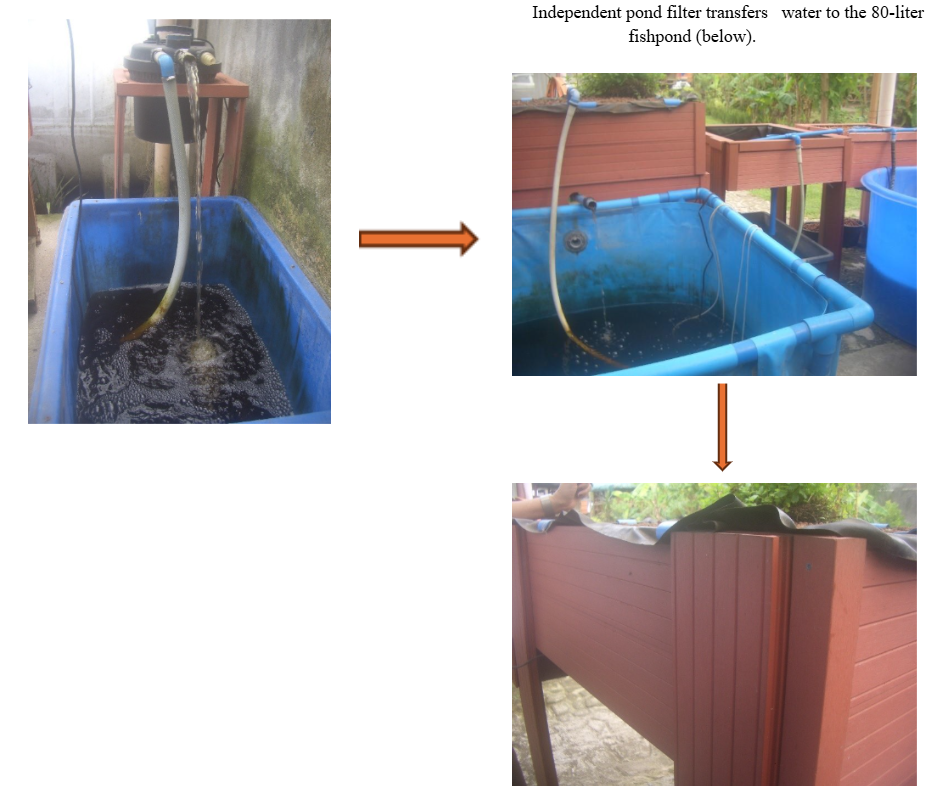
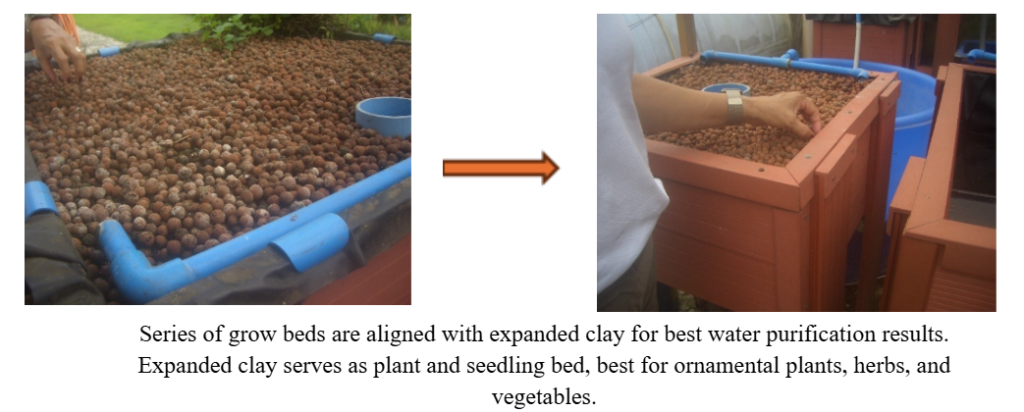
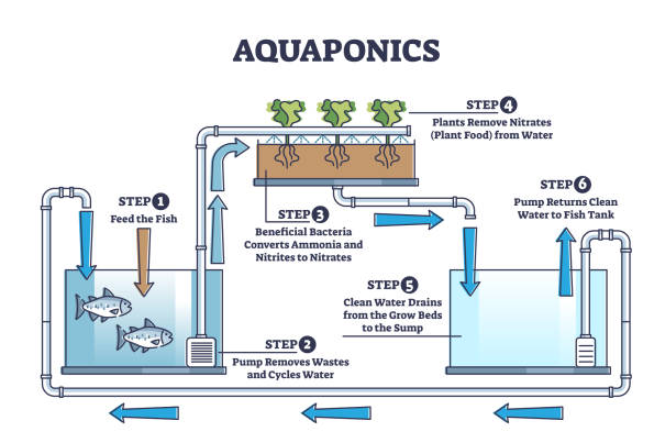
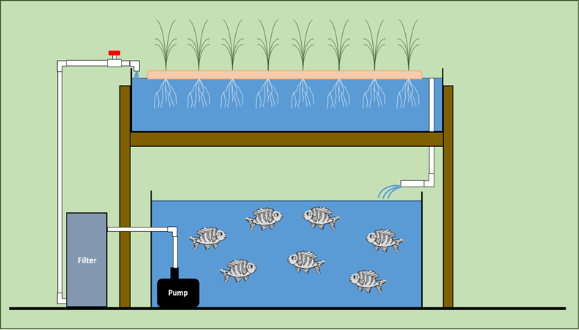
Sample diagram of an Aquaponic Grow Bed
Deep-Water Culture/Raft Bed
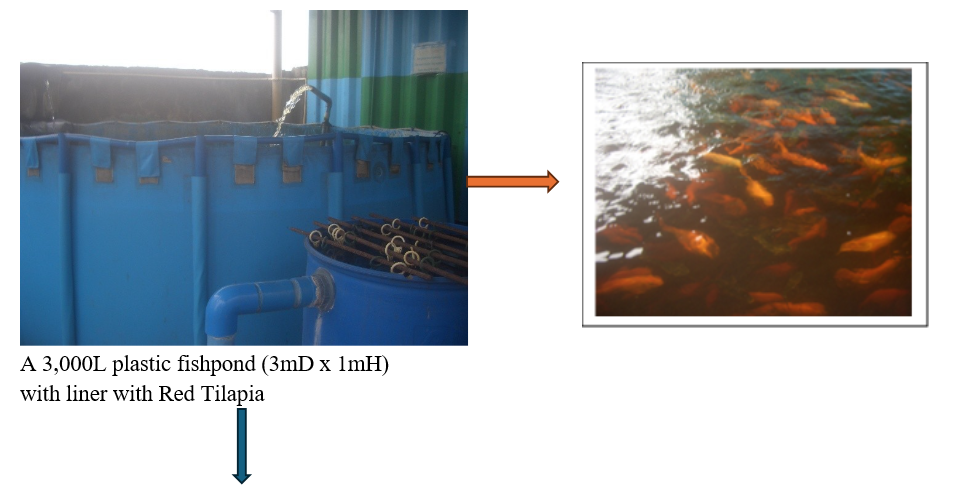
This filter drum pumps out water deposits from the pond and then transferred to the PVF filter tank which contains several light-weight plastic media that helps in nitrification.
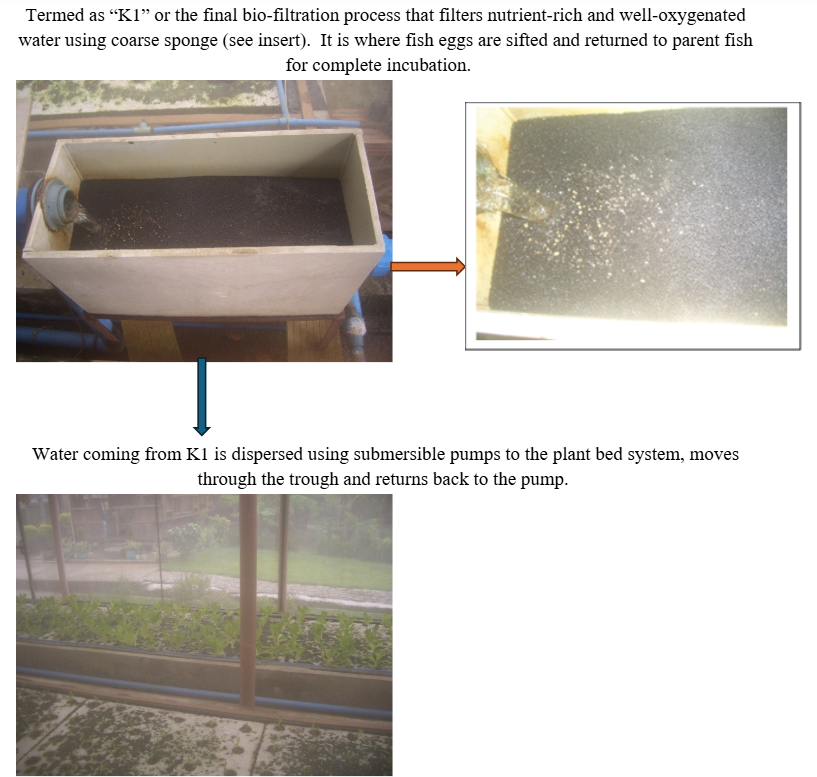
Sample diagram of a Deep-Water Culture/Raft Bed
After Orientation/Demonstration
A meeting between Ms. Esplana (MU) and the people of AGGTEDECK about potential implementation of Aquaponic Systems followed. Initially, it was suggested that appropriate measurement of suggested areas of the University were to be provided by the responsible departments of MU, for a proximate estimate of sizes of pond and equipment quotations.
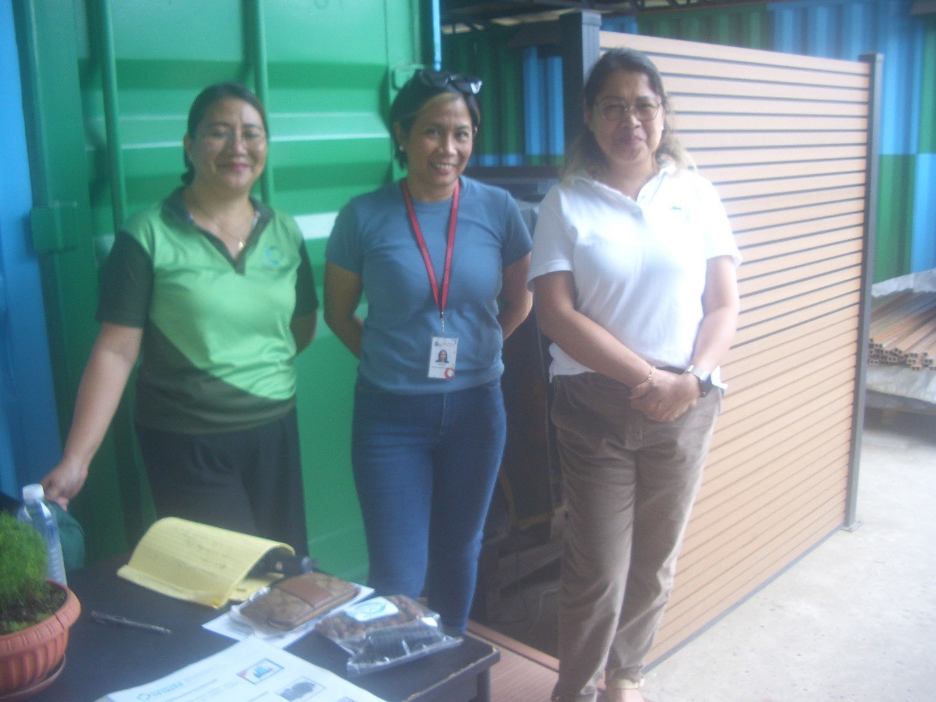
Chelo Esplana with Ms. Eliza Canon (right) and Ms. Tess Banta (left) during the site visit at the Aquaponics Developmental Area, Lemery, Batangas.