
The Institute for Global Sustainability (IGS) launched its Sustainability Seminar Series with the session “Mapúa’s 5-year Roadmap to Sustainability” held on January 27, 2026, at the Smart Classroom, North Building, Intramuros campus. Organized by Dr. Lawrence V. Madriaga, Head of IGS, together with Campus Sustainability Specialist Maria Consuelo A. Esplana and Student Organization for IGS President Francis S. Domingo, the seminar gathered students and university staff to discuss Mapúa University’s long-term sustainability goals and initiatives.
Executive Brief of the Sustainability Strategies (2026-2031)
In celebration of Mapúa University’s Foundation Week (January 25 – January 31, 2026), the Institute for Global Sustainability (IGS) organized the Sustainability Seminar Series: Mapúa’s 5-Year Roadmap to Sustainability. The hybrid event attracted more than 500 students, teaching, and non-teaching personnel of the Mapúa University in both Intramuros and Makati campuses attendees both online and onsite. The seminar underscores the university’s commitment to the UN Sustainable Development Goals (SDGs) through its sustainability plans and strategies for the next five years form 2026 until 2031.
Dr. Lawrence Madriaga presented the Mapúa University Sustainability Strategy (2026–2031) aptly named “E.A.R.T.H.: Education, Awareness, Research, and Technology for Humanity.”
E.A.R.T.H. introduces a comprehensive, university-wide roadmap to embed sustainability into academics, research, campus operations, and community engagement. Anchored on the UN Sustainable Development Goals (SDGs), the plan aims to position Mapúa as a national leader in sustainability education and innovation, fostering environmental stewardship, social responsibility, and economic resilience across its campuses and partner communities.
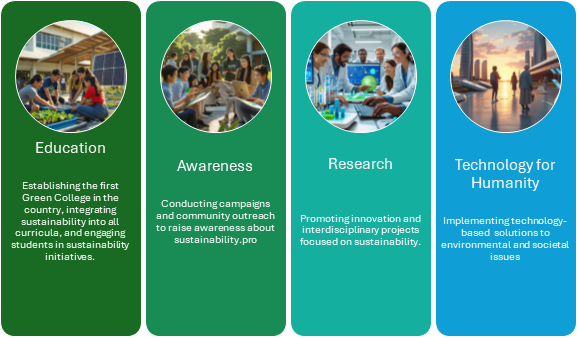
Strategic Pillars
Campus Transformation Programs
The strategy combines education with operational action through four major initiatives:
1. Project I.L.A.W. (Intelligent Lighting and Awareness for Wattage)
- Achieve a 20% reduction in electricity consumption by end of 2035
- Foster a culture of energy consciousness among students, faculty, and staff
- Integrate smart and sustainable energy practices into university operations
2. Project T. A. N. I. M. (Technology-driven Agriculture for Nutritional and Innovative Micro-gardens)
- Promote sustainable food production in limited space
- Maximize limited space through vertical and modular gardening
- Integrate aquaculture for a closed loop system
- Enhance student engagement in green innovation and environmental stewardship
3. Project T.U.B.I.G.
- T – Track Water Usage
- U – Utilize Rainwater
- B – Build Awareness
- I – Implement Low-Flow Fixtures
- G – Grow Green Spaces Wisely
4. Projects L.I.N.I.S. – Mapua University’s initiative geared towards a Zero Waste Campus
- L – Leaders for Zero Waste
- I – Innovate for Zero Waste
- N – Nurture Awareness and Action for Zero Waste
- I – Involve Stakeholders for zero Waste
- S – Scale and Sustain Zero Waste Practices
Key Milestones (2026–2031)
 Establish zero-waste, water, and energy conservation systems
Create sustainability research hubs
Achieve measurable reductions in waste, water, and emissions
Increase onsite renewable energy production
Governance & Accountability
Implementation is overseen by the Institute for Global Sustainability and a Sustainability Council. Progress is tracked through KPIs, annual reporting, dedicated budgets, grants, and strategic partnerships with government, industry, and international organizations.
Expected Outcomes by 2031
Model sustainable campus operations in the Philippines
Reduced carbon emissions, landfill waste, and resource consumption
Expanded community impact and national sustainability leadership
Sustainability at the Core
Mapúa’s E.A.R.T.H. Strategy aims to transform the university into a sustainability-driven institution by integrating green education, research excellence, and measurable operational reforms and positioning the campus as both a center of learning and a real-world model for sustainable development.
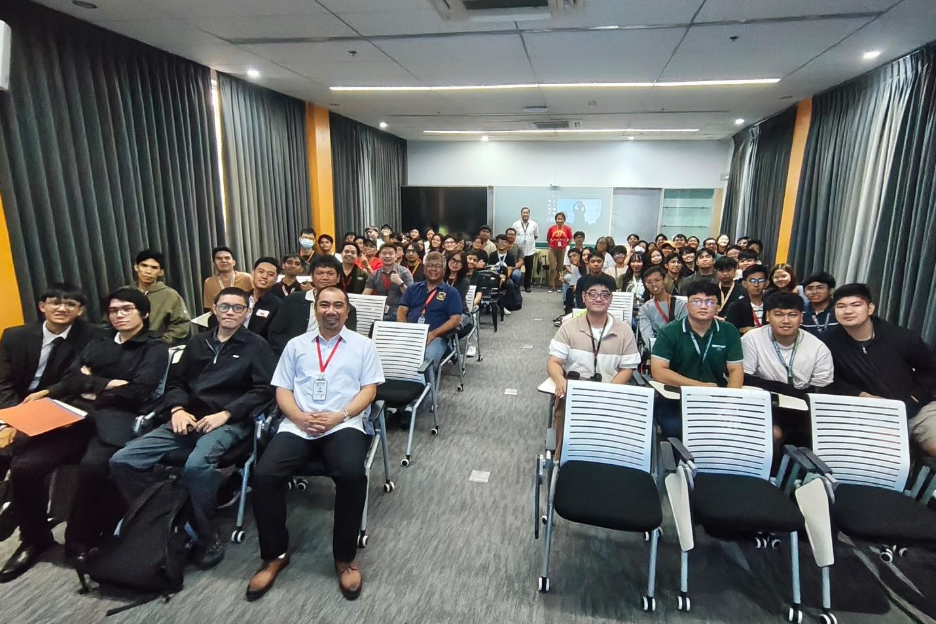
The Sustainability Seminar Series attendees’ group photo with the IGS Team, headed by Dr. Lawrence Madriaga.
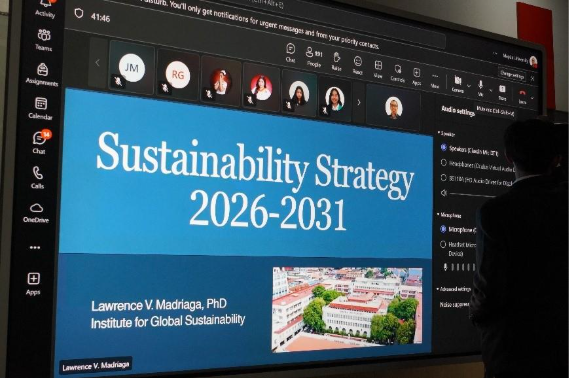
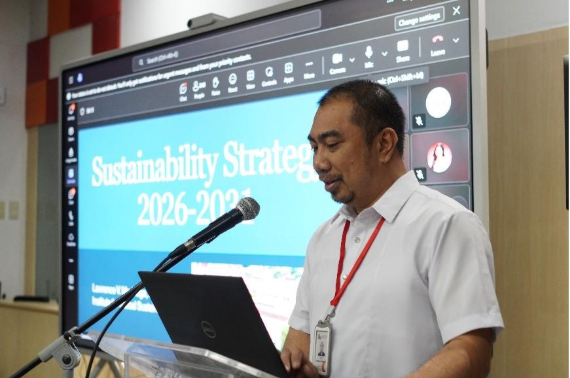
Dr. Madriaga presented the Sustainability Strategies for years 2026-2031
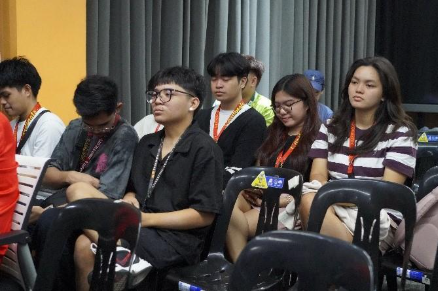
Students from different departments supported the seminar